The Problem
Every invoice came with a conversation
Superb Staging & Design started on a whim. Rumy Liskova had spent a decade as a real estate agent in New Jersey, and when she and her husband Alek listed their own investment properties, Rumy staged them herself. Enough people asked who had done the work that in February 2025 they decided to find out whether it could be a business.
With an established network across the New Jersey real estate community, the company exploded in growth. Today Superb stages well over 200 homes a year across Northern New Jersey, the Jersey Shore, and the NYC metro, running two trucks, a team of movers and designers, and a 1,000-piece designer furniture collection.
Alek built the technology side, drawing on a career in corporate technology that includes a stretch as a product director at Intuit working on QuickBooks. Roughly 90 to 95 percent of the software Superb runs on is homegrown: a single platform handling projects, inventory, marketing, and customer service, wired into QuickBooks and Google Calendar.
That approach has a requirement built into it. A vertically integrated stack only works if each outside piece does one job extremely well and connects cleanly to everything else. And the piece that was not working was payments.
Like most service businesses, Superb decided early that it could not keep absorbing credit card fees. So they did what small businesses do: they added a line item to the invoice called “credit card fees” and started having the conversation.
It became an extremely tedious customer experience. We would be the ones asking the customer, hey, are you paying by credit card or are you paying by check? And if you’re paying by credit card, we’d have to have this whole conversation about how we have to charge you a little extra.
Alek Liskov, Co-Owner
Superb’s clients are listing agents at firms like Compass, Sotheby’s, and Christie’s, people the company depends on for repeat business and referrals. When clients pushed back on covering their own card fees, it added unwanted friction to Superb’s relationships.
They would come back with, yeah, but everybody else covers it, so why wouldn’t you? And as a brand new small business, a lot of the time you’re thinking, I need this customer, I need the relationship, I need the reputation. So you eat those costs.
Alek Liskov, Co-Owner
Before Nickel, nearly every client paid by card, which meant Superb had to navigate an awkward conversation or eat into their margins on nearly every invoice.
The Solution
A frictionless customer experience with no fees
Superb found Nickel through a search and switched, and the fee conversation stopped being a conversation.
Now a client gets a payment link. The link shows both options side by side: pay by bank transfer for free, or pay by card and cover the 2.9% fee. Nobody has to negotiate anything, because the choice and its cost are visible on the page.
Nickel is a very clean customer choice in terms of how they want to pay and the associated cost with each option. We basically don’t have to have those conversations anymore. We just send them the link.
Alek Liskov, Co-Owner
For someone whose career has been spent thinking about customer experience, that is the part that matters most.
There’s one thing that, whether it was my time at Intuit or even before that, I always focus on: a frictionless customer experience. And Nickel does provide that.
Alek Liskov, Co-Owner
The fee discussion rarely comes up anymore, and when it does, the answer is easy. There is a way for the client not to pay the fee, and it is right there on the link.
Alek’s read on the product itself was shaped by two decades of looking at software professionally.
First impressions: very easy to use, very easy to sign up, easy to navigate. A million times easier than most other apps, and very clean, which I personally appreciate from a design perspective. And then it just worked reliably and consistently.
Alek Liskov, Co-Owner
That reliability is what let Nickel slot into the stack rather than sit beside it. Superb’s agents log into the company’s own portal with a phone number or email, see every project and outstanding invoice, and pay through their Nickel links without anyone chasing them. When a client wants to extend a staging engagement another month or two, they can request it themselves and a payment link follows automatically.
These agents have a million messages a day and a million emails a day, and I don’t want to be another person nagging them to pay an invoice. The ones who do business with us all the time know our portal. They go there, they get their links, and they pay.
Alek Liskov, Co-Owner
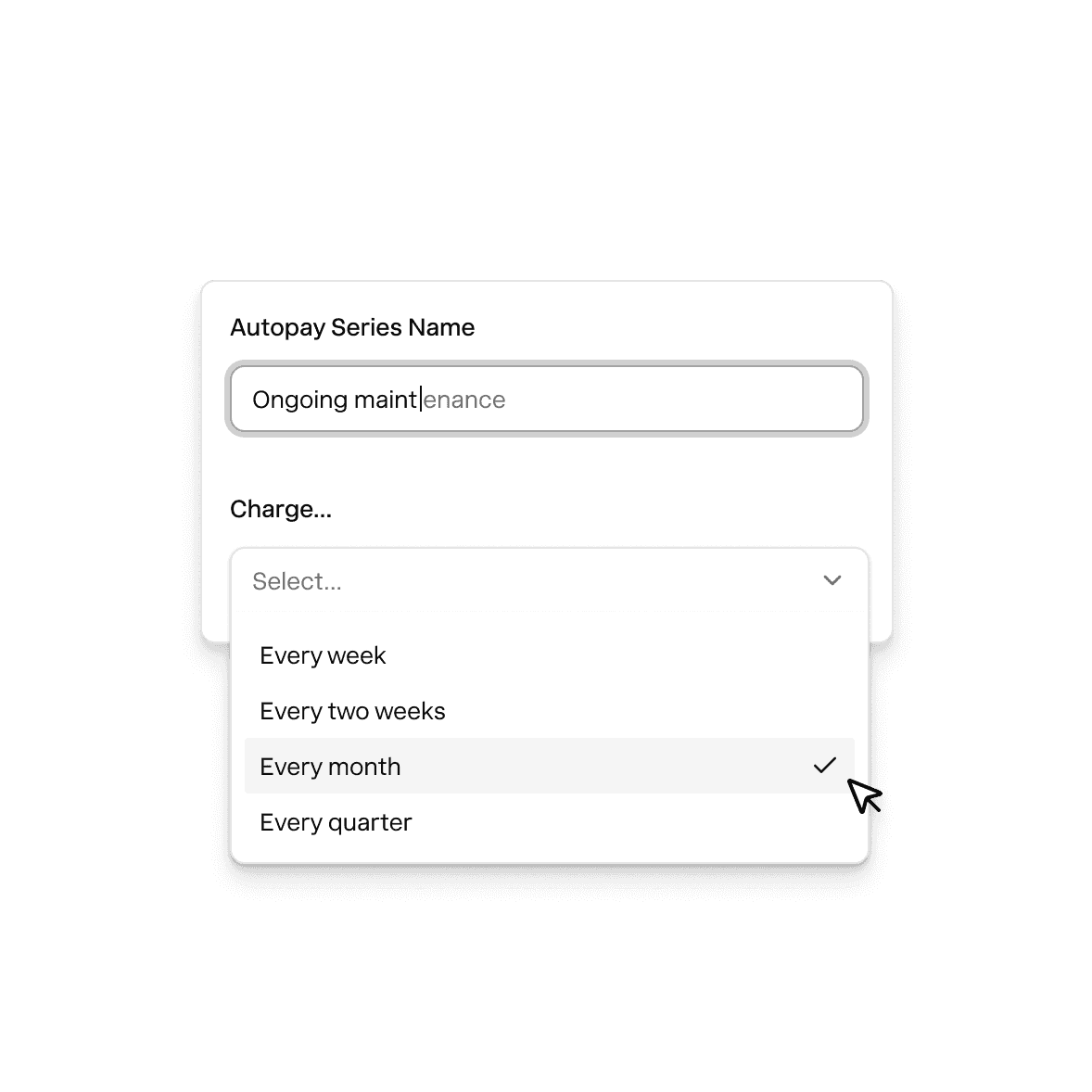
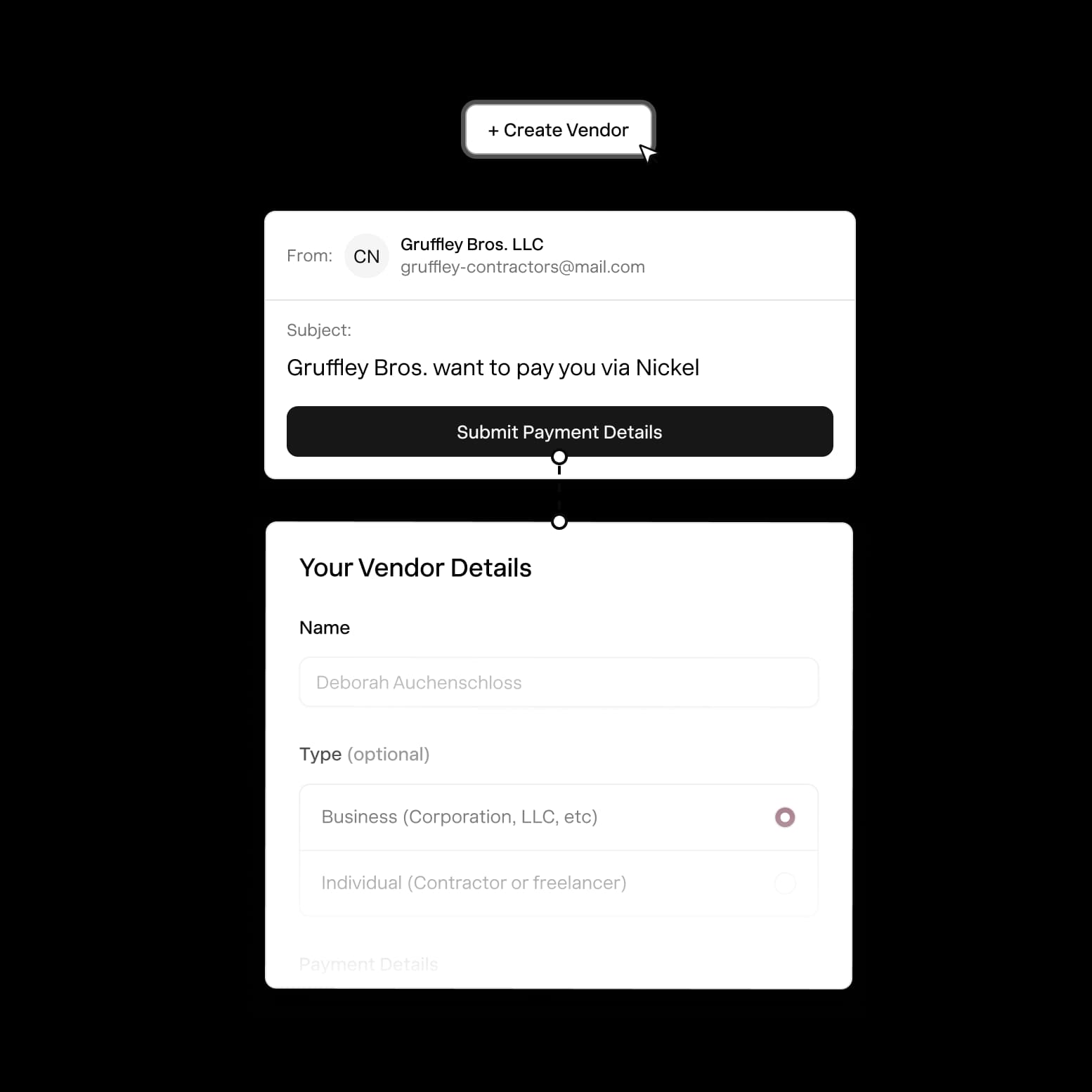
Superb uses both sides of the platform. Client invoicing runs through Nickel, and so do payments out to contractors, designers, movers, and vendors.
Any contractors we need to pay, I find it very easy to automate through Nickel. And I find the benefit of consolidating accounts receivable and accounts payable. You have a good understanding of total cash flow.
Alek Liskov, Co-Owner
Ten months in, Alek puts the recovered card fees and the time spent negotiating them at thousands of dollars saved. But even more valuable, that unwanted friction has been removed and payments show up on time.
The payments are always on time as expected, if not earlier.
Alek Liskov, Co-Owner