You're setting up payments, whether for your small business, freelance work, or online sales, and keep seeing "eCheck" and "ACH" mentioned. If you don’t know whether they’re the same thing, which is the better option for your business, and the mechanics of how each works, you’ve come to the right place.
This guide explains the difference between eCheck and ACH payments, compares the speed of these payments, explains the associated fees, breaks down the security safeguards for each transaction type and gives you a decision framework for choosing the right method for your business.
eCheck vs ACH: What’s the Difference
What is an eCheck?
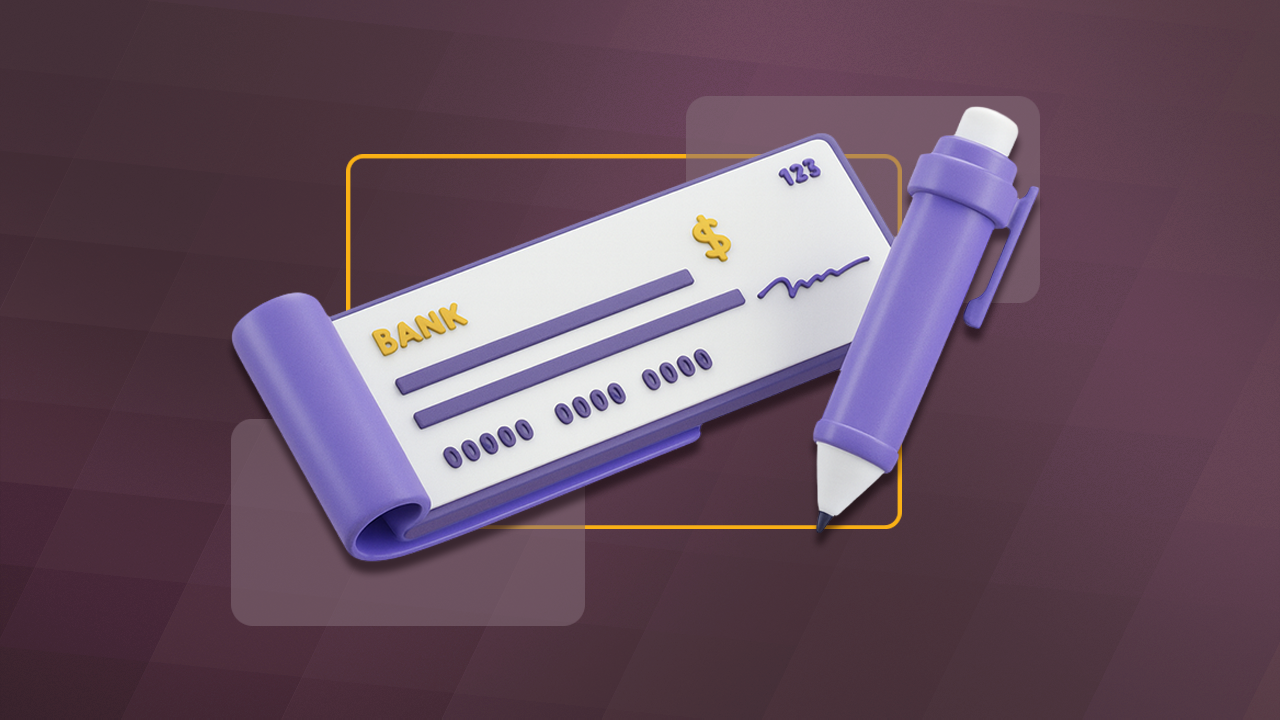
An eCheck (electronic check) is a digital version of a paper check. Instead of hand writing a check, customers provide their bank account details and authorize the payment electronically. The transaction processes just like a traditional check would, money moves directly from one bank account to another, but without the physical paper, mailing delays, or manual deposit at the bank.
Common eCheck uses:
- One-time online payments (alternative to credit cards at checkout)
- Large invoice payments where customers prefer check-like authorization
- Professional services payments (law firms, accounting firms, consultants)
- Industries with legacy check workflows (real estate, insurance, healthcare)
What is an ACH Payment?
ACH (Automated Clearing House) is an electronic network that moves money between bank accounts in the United States. Established in the early 1970s by the Federal Reserve, the ACH network processes billions of transactions annually, everything from direct deposit paychecks to bill payments to B2B vendor payments.
Common ACH uses:
- Direct deposit (payroll)
- Recurring bill payments (utilities, subscriptions)
- B2B invoice payments
- Government payments (Social Security, tax refunds)
- One-time transfers between bank accounts
(For more on the various types of ACH transactions, consult Nickel’s guide on ACH credit vs. debit payments)
The Relationship Between eCheck and ACH
Here's the crucial point: An eCheck is a type of ACH payment, but not all ACH payments are eChecks.
Think of it like bourbon and whiskey: all bourbon is whiskey, but not all whiskey is bourbon. All eChecks use the ACH network for processing, but ACH encompasses much more than just eChecks, it includes direct deposit, recurring payments, and standard electronic transfers that don't mimic the check experience.
Why this matters: Many businesses assume eCheck and ACH are interchangeable terms, but they have different costs, speeds, and use cases. Understanding the fees that you’ll accrue with each payment method and how quickly the money will reach your account will help you determine which type of transaction is best for your needs.
Is ACH The Best Option for Me?
ACH payments offer flexibility, speed, and cost savings over other transaction types. ACH payments work well for businesses that:
- Process high payment volumes
- Operate on low profit margins
- Need recurring payment collection
- Want faster payment processing
How Much Will an ACH Transaction Cost Me?
While ACH payments are cheaper than paying by credit card, it’s important to recognize the costs that are often associated with this transaction method. On most payment processors, an ACH transaction will cost around $.20-$1.50 per payment. If you assume a standard ACH fee of $.50 and you’re conducting 25,000 transactions a year, that means you’ll end up paying $12,500 in ACH fees annually.
You don’t have to lose that money, though.
Nickel offers unlimited $0 transactions on up to $25,000. Customers who pay for a higher tier of service can conduct transfers of up to $1 million for free.
And Nickel makes getting paid simple: generate a payment link that gives customers the choice to pay with ACH for free or via credit card. You can send this link via email, text message, or embed it on your website, without slogging through any complicated setup. Our platform offers multiple payment methods in one place, making it easy for customers to pay however they prefer while you save on fees.
When eChecks Are The Best Option
eChecks offer familiar authorization processes, work well for occasional large payments, and integrate easily into existing payment workflows, especially for businesses in industries where customers expect check-like payment options. They’re still used across a range of industries, largely because those professionals are familiar with the process of getting paid by eCheck.
Online checkout pages:
- Many ecommerce sites offer eCheck as an alternative to credit cards
- Especially common for high-ticket purchases where credit card fees would be substantial
Invoice payment portals:
- B2B businesses may offer eCheck as a payment option on invoice portals
- Often positioned alongside credit card, wire transfer, or standard ACH options
Professional services:
- Law firms, accounting firms, consultants often accept eChecks
- Clients familiar with paying by check appreciate the digital convenience
Who eCheck Payments Are Best For
eChecks make sense for businesses that:
- Have customers who prefer check-like payment experience
- Process occasional large one-time payments
- Already have eCheck-only payment infrastructure
Does Nickel Support eChecks?
Technically, yes. But you’d be choosing a more cumbersome, slower option.
Nickel's payment link already handles what eChecks do—collecting bank account information to allow a payment—but faster, cheaper (free!), and with a better customer experience. There's no reason to add eCheck-specific processing when standard ACH through Nickel does the same thing without the extra steps or fees.
If your customer insists they want eCheck processing via Nickel’s platform, they can enter their bank account details through a Nickel payment link and authorize the payment. The only difference is they won't see the word "eCheck" on the form. But the experience will be faster and more secure.
The bottom line: Unless your customers specifically prefer a check-like experience or have a strong preference for eCheck payment process, ACH is usually the better choice. eChecks essentially operate like an earlier ancestor of ACH.
Security & Compliance: Are eChecks and ACH Safe?
Both eCheck and ACH payments use the same underlying security infrastructure since eChecks are processed through the ACH network. The rate of ACH fraud is incredibly rare. A fraction of 1% of total transactions, according to NACHA. Just 8 cents are lost on every $10,000 of payments.
Here's what protects your money when you use these payment methods.ACH Network Security Infrastructure
Multi-Layer Security System:
The ACH network operates under strict security protocols managed by NACHA (National Automated Clearing House Association), which establishes the rules that every financial institution must follow. Here's how the system protects transactions:
1. Bank-Level Encryption
- All ACH transactions are encrypted with the same military-grade security used for wire transfers
- Data is encrypted from the moment it leaves your device until it reaches the recipient's bank
- Even if intercepted, encrypted data is virtually impossible to decrypt without the proper keys
2. Multi-Factor Authentication
- ACH processors require multiple verification steps before authorizing a transaction
- Common methods: password + SMS code, biometric verification (fingerprint/face ID), security questions
- Prevents unauthorized access even if one credential is compromised
3. Account Verification Systems
- Micro-deposits: Small test deposits (typically $0.01-$0.99) sent to verify account ownership before enabling ACH payments
- Instant verification: Third-party services (like Plaid) verify account ownership by securely connecting to your bank in real-time
- Reduces risk of payments being sent to fraudulent accounts
4. Transaction Monitoring & Fraud Detection
- AI-powered systems monitor transaction patterns 24/7
- Flags unusual activity: large payments to new recipients, payments at odd hours, geographic anomalies
- Automatic holds or verification requests for suspicious transactions before they process
eCheck Security (Additional Protections)
Since eChecks are processed through the ACH network, they inherit all the security features listed above. However, the eCheck process can include extra verification steps that protect your money. That enhanced authorization process can include:
- Dual Authorization: Customer must explicitly authorize the eCheck payment (similar to signing a paper check)
- Account Verification: Extra verification step before first eCheck payment processes (micro-deposits or instant verification)
- Check Image Capture: Some eCheck systems capture an image of authorization for dispute resolution
Trade-off: The additional verification adds processing time but reduces fraud risk for one-time, high-value transactions.
What Happens If Security Is Breached?
ACH/eCheck Fraud Protection for Consumers & Businesses:
1. Transaction Reversibility (60-90 Days) Unlike wire transfers (which are nearly impossible to reverse), ACH and eCheck transactions can be reversed if unauthorized:
- Consumer protection: 60 days to dispute unauthorized ACH debits from your account
- Business protection: 60-90 days to dispute fraudulent transactions depending on your payment processor
- Banks are required to investigate and often reverse unauthorized transactions while investigating
2. NACHA Operating Rules Enforcement If a breach occurs due to a financial institution's failure to follow NACHA rules:
- The institution is liable for losses resulting from security violations
- NACHA can impose fines up to $500,000 per violation for serious security breaches
- Repeat violators can be expelled from the ACH network entirely
3. Payment Processor Insurance & Guarantees Most payment processors offer:
- Fraud protection guarantees: Unauthorized transactions reversed and refunded
- Insurance coverage: Multi-million dollar insurance policies covering customer losses from security breaches
- Zero-liability policies: Customers typically aren't held responsible for unauthorized transactions if reported promptly
4. What You Should Do If You Suspect Fraud
- Immediately: Contact your bank or payment processor to freeze the transaction (if still pending)
- Within 24 hours: File a fraud dispute with your bank and payment processor
- Within 60 days: Officially dispute unauthorized ACH transactions to trigger investigation
- Change credentials: Update passwords, enable MFA, review recent account activity
The Bottom Line: ACH Probably Meets Your Needs
Despite their differences, eChecks and ACH payments share many fundamental characteristics. They both use the ACH network, allow for recurring payments, enable better cash flow than accepting checks and are significantly cheaper than credit cards.
eChecks are digital versions of paper checks—familiar to customers who prefer check-like workflows, but slower (3-5 days) and typically cost $0.30-$1.50 per transaction. Standard ACH is faster (1-3 days), often cheaper ($0.20-$1.50 or free), and better suited for recurring payments and high-volume businesses.
For most businesses, standard ACH wins. It's faster, cheaper (especially with free ACH processors), and handles both one-time and recurring payments seamlessly. But if you’re already using ACH payments, you’re probably overpaying on processing fees.
Next action: Calculate how much you could save by switching your payment processor to Nickel. Our simple payment link will save you the headache of chasing your customers and our $0 ACH fees will save you money.